ETFs vs Mutual Funds: Which Is Better for You in 2026?
June 16, 2026
🏷️ investing🏷️ etf🏷️ mutual-fund🏷️ comparison
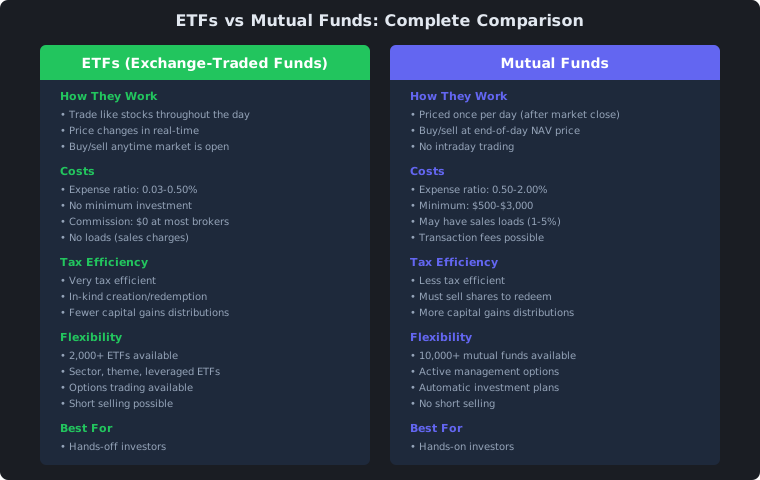
The ETF vs mutual fund debate has raged for two decades. The truth: both are excellent investment vehicles, but they serve different investors in different ways.
Here’s the complete breakdown so you can choose the right one.
The Core Difference
Feature
ETFs
Mutual Funds
Trading
Throughout the day
Once per day (after close)
Pricing
Real-time market price
End-of-day NAV
Minimum
Price of 1 share (or $1)
$500-$3,000
Order type
Market, limit, stop
Buy/sell at NAV
Automation
Requires manual buys
Auto-invest available
Cost Comparison
Expense Ratios
Fund Type
ETF
Mutual Fund
U.S. Index
0.03%
0.04%
International Index
0.07%
0.10%
Bond Index
0.05%
0.06%
Active
0.50-1.00%
0.75-2.00%
Example: On a $100,000 portfolio:
ETF at 0.03% = $30/year
Mutual fund at 0.50% = $500/year
Difference: $470/year
Sales Loads
Load Type
ETF
Mutual Fund
Front-end load
Never
0-5.75%
Back-end load
Never
0-1%
12b-1 fee
Never
0.25-1.00%
Tax Efficiency
ETFs are significantly more tax-efficient than mutual funds:
Factor
ETF
Mutual Fund
Capital gains distributions
Rare
Annual
In-kind creation
Yes
No
Redemption method
In-kind
Must sell securities
Tax drag (annual)
0.0-0.5%
1.0-2.0%
Why ETFs win: When investors sell mutual fund shares, the fund must sell securities to raise cash, triggering capital gains that are distributed to all shareholders. ETFs use in-kind transfers that avoid this.
Performance Comparison
Metric
ETFs
Mutual Funds
Average 10-year return (S&P 500)
12.8%
12.5%
After fees
12.77%
12.00%
After taxes
12.50%
11.00%
The verdict: ETFs win on taxes and fees. Mutual funds may outperform in niche areas with skilled active managers.