Market crashes are terrifying. Headlines scream “WORST DAY SINCE 2008.” Your portfolio drops 20-30%. Everyone is panicking.
But here’s the truth: every market crash in history has been followed by a recovery. Every single one.
The investors who profit most from crashes aren’t the ones who sell at the bottom — they’re the ones who stay calm and buy more.
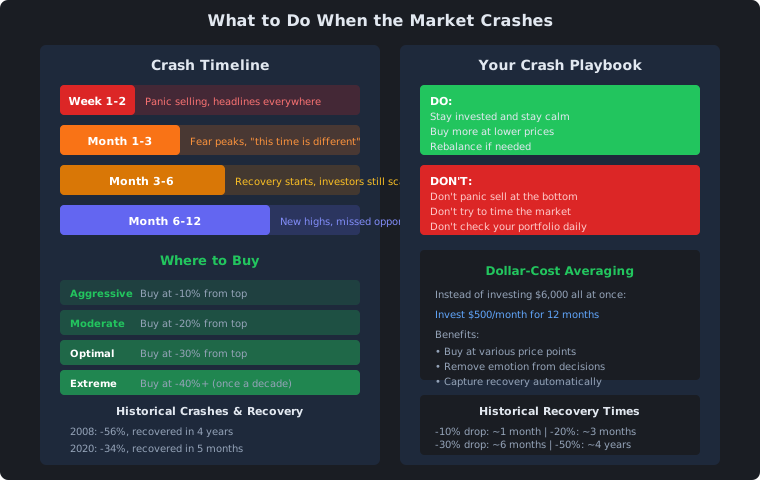
The Crash Timeline
| Phase | What Happens | What You Should Do |
|---|---|---|
| Week 1-2 | Panic selling, headlines everywhere | Do nothing. Turn off notifications |
| Month 1-3 | Fear peaks, “this time is different” | Start buying if you have cash |
| Month 3-6 | Recovery begins, investors still scared | Keep buying — best opportunity |
| Month 6-12 | New highs, missed opportunity | Stay invested, wait for next pullback |
The Crash Playbook: DO
1. Stay Invested
The worst thing you can do is sell at the bottom. History shows:
| Crash | Drop | Recovery Time | Return If You Held |
|---|---|---|---|
| 2008 Financial Crisis | -56% | 4 years | +400% by 2021 |
| 2020 COVID Crash | -34% | 5 months | +120% by 2021 |
| 2022 Bear Market | -25% | 2 years | +40% by 2024 |
| 2018 Correction | -20% | 4 months | +50% by 2019 |
2. Buy More at Lower Prices
If you have cash on hand, crashes are sales events:
| Market Drop | Buy Signal |
|---|---|
| -10% from top | Start watching closely |
| -20% from top | Begin buying (moderate) |
| -30% from top | Strong buy opportunity |
| -40%+ from top | Once-in-a-decade chance |
3. Rebalance Your Portfolio
If stocks dropped and bonds stayed stable:
- Sell some bonds (which held value)
- Buy stocks (now cheaper)
- Return to your target allocation
4. Dollar-Cost Average
Instead of investing $12,000 all at once, invest $1,000/month for 12 months:
| Month | Price | Shares Bought |
|---|---|---|
| 1 | $100 | 10 shares |
| 2 | $85 | 11.8 shares |
| 3 | $75 | 13.3 shares |
| 4 | $80 | 12.5 shares |
| 5 | $90 | 11.1 shares |
| 6 | $95 | 10.5 shares |
Result: Average cost = $87.50 vs. original $100. You bought 69.2 shares instead of 60.
The Crash Playbook: DON’T
1. Don’t Panic Sell at the Bottom
| Mistake | Cost |
|---|---|
| Selling at -30% | Lock in 30% loss |
| Missing 10% recovery | Lose 10% gain |
| Missing 20% recovery | Lose 20% gain |
| Total damage | 50% worse than holding |
2. Don’t Try to Time the Market
Even professional fund managers can’t consistently time the market. Studies show:
- Missing the 10 best days in 20 years cuts returns by 50%
- 7 of those 10 best days occur during crashes or right after
- By the time you realize it’s a crash, the recovery may have started
3. Don’t Check Your Portfolio Daily
Daily checking leads to emotional decisions. Instead:
| Frequency | Benefit |
|---|---|
| Weekly | Enough to stay informed, not enough to panic |
| Monthly | Better for long-term investors |
| Quarterly | Best for hands-off investors |
4. Don’t Change Your Strategy
Your investment plan was made during calm times. Don’t change it during a crisis. The plan accounts for crashes — that’s why you have bonds and diversification.
Historical Crash Recovery Times
| Crash | Drop | Time to Recovery | Total Return After |
|---|---|---|---|
| 2008 Financial Crisis | -56% | 4 years | +400% (by 2021) |
| 2000 Dot-Com Bubble | -49% | 7 years | +150% (by 2013) |
| 1987 Black Monday | -34% | 2 years | +300% (by 1989) |
| 1973 Oil Crisis | -48% | 7 years | +200% (by 1980) |
Key insight: The bigger the crash, the bigger the opportunity. But you have to be in the market to benefit.
The Psychology of Crashes
Why We Panic
| Trigger | Emotional Response | Rational Response |
|---|---|---|
| -20% drop | ”I’m losing everything" | "I’m buying at a discount” |
| Bad news | ”It’s going to zero" | "Companies still operate” |
| Friends selling | ”I should sell too" | "They’re making a mistake” |
| Headlines | ”This time is different" | "It never is” |
How to Stay Calm
- Remember the math: Every crash has recovered
- Focus on companies: You own businesses, not ticker symbols
- Turn off notifications: Don’t watch CNBC during crashes
- Talk to a rational friend: Someone who’s been through crashes before
Practical Steps for the Next Crash
| Step | Action | Timeline |
|---|---|---|
| 1 | Turn off portfolio notifications | Day 1 |
| 2 | Write down your investment thesis | Day 1 |
| 3 | Check if you have cash to deploy | Day 2 |
| 4 | Set up automatic buys at -20%, -30% | Day 3 |
| 5 | Don’t check portfolio for 2 weeks | Week 1-2 |
| 6 | Rebalance if needed | Month 1 |
| 7 | Continue regular contributions | Ongoing |
Summary
| Key Point | Takeaway |
|---|---|
| Crashes are normal | Happen every 5-10 years |
| Recovery always happens | Every crash in history has recovered |
| Selling = locking losses | Hold through the pain |
| Buying = opportunity | Buy at discounts when possible |
| DCA removes emotion | Invest regularly, not all at once |
| Turn off noise | Headlines are designed to scare you |