Life insurance is a contract: you pay premiums, and the insurer pays a lump sum (the death benefit) to your beneficiaries when you die.
It sounds simple, but the choices — term vs whole, how much coverage, which company — can be overwhelming.
The Two Main Types
Term Life Insurance
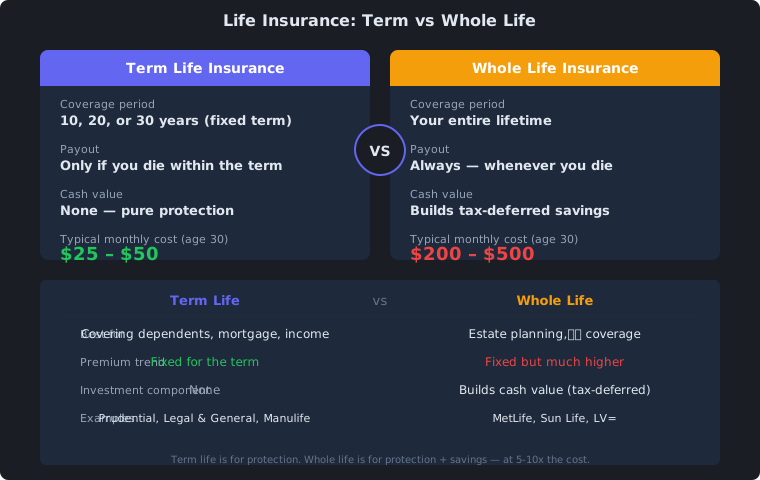
Term life covers you for a fixed period — typically 10, 20, or 30 years.
If you die during the term, your beneficiaries get the payout. If you outlive the term, coverage ends and you get nothing back.
Best for: People who need coverage for a specific period — until the mortgage is paid off, kids finish college, or you reach retirement.
| Feature | Term Life |
|---|---|
| Coverage period | 10–30 years |
| Premium | Fixed, low ($25–50/month at age 30) |
| Cash value | None |
| Payout | Only if you die within the term |
Real examples:
- US: Prudential’s Term Essential — 20-year term, $500k coverage, ~$35/month for a healthy 30-year-old
- UK: Legal & General flexible term — 25-year term, £250k coverage, ~£18/month
- Canada: Manulife Term 20 — $500k coverage, ~$45/month
Whole Life Insurance
Whole life covers you for your entire lifetime. Premiums are much higher, but the policy builds cash value over time that you can borrow against or withdraw.
Best for: Estate planning, permanent coverage needs, or people who want a forced savings component.
| Feature | Whole Life |
|---|---|
| Coverage period | Entire lifetime |
| Premium | Fixed, high ($200–500/month at age 30) |
| Cash value | Builds tax-deferred savings |
| Payout | Always (whenever you die) |
Real examples:
- US: MetLife whole life — $500k coverage, ~$350/month for a healthy 30-year-old
- UK: LV= Whole Life Plan — £100k coverage, ~£65/month
- Canada: Sun Life Sun Whole Life — $250k coverage, ~$200/month
Which One Should You Choose?
Ask yourself these questions:
| If you… | Choose |
|---|---|
| Need coverage for 20–30 years (mortgage, kids) | Term life |
| Want the lowest possible premium | Term life |
| Need coverage your entire life (estate planning) | Whole life |
| Want a cash-value savings component | Whole life |
| Are on a tight budget | Term life |
For 90% of people, term life is the right answer. It’s affordable, simple, and covers the real need: protecting your family during the years they depend on your income.
How Much Coverage Do You Need?
A common rule of thumb is 10–12x your annual income. More precise methods:
- DIME method: Debt + Income (5–7 years) + Mortgage + Education expenses
- Human life value: Present value of your future earnings
Real examples:
- A 35-year-old earning $60,000/year with a $200k mortgage and two kids → target $500k–$750k coverage
- A 30-year-old earning £40,000/year with no dependents → may not need life insurance at all yet
What Affects Your Premium?
| Factor | Impact |
|---|---|
| Age | Younger = cheaper. A 25-year-old pays half what a 45-year-old pays |
| Health | Smokers pay 2–3x more. Conditions like diabetes or heart disease increase rates |
| Occupation | High-risk jobs (construction, pilot, fishing) cost more |
| Coverage amount | More coverage = higher premium |
| Term length | 30-year term costs more than 20-year term |
| Gender | Women live longer, so premiums are typically lower |
How the Claims Process Works
- The policyholder dies
- The beneficiary files a claim with the insurer (calls or submits online)
- The insurer requests a certified death certificate
- For term life during the contestability period (first 2 years), the insurer may review medical records
- Payout is made — typically within 30–60 days
Claims statistics: In the US, 98% of term life claims are paid (ACLI data). The main reasons for denial are suicide within the first 2 years or material misrepresentation on the application.
Common Riders (Add-Ons)
| Rider | What It Does |
|---|---|
| Accelerated death benefit | Access a portion of the death benefit if diagnosed with a terminal illness |
| Waiver of premium | Insurer waives premiums if you become disabled |
| Child term rider | Small life insurance coverage for your children |
| Return of premium | Get all premiums back if you outlive the term (costs more) |
Country-Specific Notes
United States
- Life insurance death benefits are generally income tax-free for beneficiaries
- The SECURE Act affects how inherited retirement accounts are taxed but doesn’t impact life insurance payouts
- Top insurers: Prudential, MetLife, Northwestern Mutual, New York Life, State Farm
United Kingdom
- Life insurance is often sold as “life assurance” (whole life) vs “term assurance” (term life)
- Many policies are written in trust — this keeps the payout outside your estate for inheritance tax purposes
- Top insurers: Legal & General, Aviva, LV=, Vitality, AIG UK
Canada
- Life insurance premiums are paid with after-tax dollars, and the death benefit is tax-free
- Critical illness insurance is commonly bundled with life insurance in Canada
- Top insurers: Manulife, Sun Life, Canada Life, Desjardins, Industrial Alliance
Summary
| Key Point | Takeaway |
|---|---|
| Term life | Low-cost coverage for a fixed period — best for most people |
| Whole life | Permanent coverage + cash value — 5–10x more expensive |
| Coverage target | 10–12x your annual income |
| Lock in early | Premiums increase with age; buy when you’re young and healthy |
| Compare quotes | Get quotes from 3+ insurers before choosing |